Anglo-American state of war
Common SenseThe Anglo-American state of war is the turning point in Thomas Paine’s case for American independence: it transforms a dispute once argued as a contest over the terms of union with Great Britain into a struggle over whether the colonies can remain subject to a power that has resorted to arms against them. Paine treats the outbreak of hostilities on April 19, 1775, not merely as a new phase of conflict but as the moment that changes the political and moral terms of the question. In his account, continued dependence risks prolonging war, while independence offers a route toward continental self-government and recognition among nations.
From Debate to War
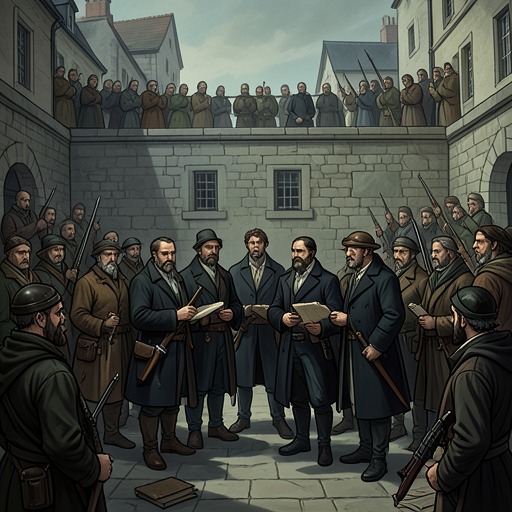
Paine begins from a closed political debate. Volumes have been written about the struggle between England and America, and people of different ranks have entered the dispute for different reasons; yet, he argues, discussion has failed to settle it. Arms have become the last resort, chosen by the king and accepted by the continent. That description assigns responsibility for the transition to armed conflict to the British decision to use force, while presenting the colonies’ resistance as the answer to a challenge already made.
The date of the break is crucial to Paine’s argument. Before April 19, 1775, advocates on both sides still sought union with Great Britain, differing chiefly over how to achieve it: one side proposed force, the other friendship. Once hostilities began, however, those prior plans became obsolete, like last year’s almanacs. The war therefore does more than interrupt negotiations. It invalidates the political assumptions under which reconciliation had previously seemed possible and opens what Paine calls a new era in politics.
Paine’s reasoning also depends on the cost and purpose of resistance. He rejects the idea that the colonies should take up arms merely to secure repeal of a pecuniary law: lives, he argues, are too valuable to be spent on such a narrow object. The justification changes when armed force threatens people and destroys property. In that circumstance, resistance becomes a defense of the inhabitants and their country, and subjection to Britain ought to cease. Paine accordingly locates the beginning of American independence at the first musket fired against the colonies, treating that point as the consequence of a chain of events the colonies did not author.
The Failure of Reconciliation
Paine argues that reconciliation cannot restore the relationship because the conditions that made it imaginable have been overturned. Peaceful methods have failed, and repeated petitions have been rejected. In his view, petitioning has not softened royal power; it has instead encouraged the vanity and obstinacy of kings. He therefore urges a final separation rather than leaving another generation to inherit a conflict fought under the discredited language of parent and child.
The appeal is not simply for revenge. Paine says he wants the injuries and affections involved in the struggle to awaken the colonies from delay and indecision, so they can pursue a definite political aim. The danger, as he frames it, is that Britain or Europe need not defeat America if the continent defeats itself through timidity and postponement. He makes the coming winter a test of political resolve: properly used, it could be worth an age; neglected, it would expose the whole continent to the consequences of lost time.
The practical case against continued dependence is equally central. A government across the ocean, three or four thousand miles away and ignorant of local conditions, cannot conveniently administer the colonies’ affairs. Paine describes the burdens of sending a petition across that distance, waiting four or five months for an answer, and then spending another five or six months explaining it. The delay is not a mere inconvenience: it reveals a mismatch between a distant island’s authority and a continent’s needs. He argues that if Britain cannot conquer the colonies, it cannot govern them justly, and that a continent should not be perpetually governed by an island.
Dependence also draws the colonies into European conflicts. Paine presents American commerce as the colonies’ natural pursuit and argues that it could secure peace and friendship across Europe. But attachment to Britain makes America a counterweight in British politics and turns its trade into a casualty whenever Britain goes to war with another power. The colonies would be safer, he reasons, if they could remain neutral rather than being pulled into disputes with nations against which they have no grievance. In this analysis, separation is both a claim to self-rule and a means of avoiding wars created by imperial alignment.
The War’s Political and Legal Consequences
War exposes a contradiction in the colonies’ political status: they resist Britain while continuing to call themselves British subjects. Paine argues that this combination is difficult for foreign governments to understand and leaves the colonies classified as rebels rather than as a political community entitled to diplomatic dealings. While they retain that designation, other powers cannot readily mediate between the combatants, and France or Spain have little reason to assist a resistance whose stated purpose might be only to repair the British-American connection.
Independence, by contrast, would allow the colonies to address foreign courts in their own name. Paine proposes publishing a manifesto that sets out the injuries endured, the failed peaceful attempts at redress, and the colonies’ inability to live safely under the British court. It would also assure other courts of America’s peaceful disposition and desire for trade. Such a declaration, he argues, could do more for the continent than another shipload of petitions to Britain: independence would make America legible abroad as a separate nation and open the possibility of mediation and commercial relations.
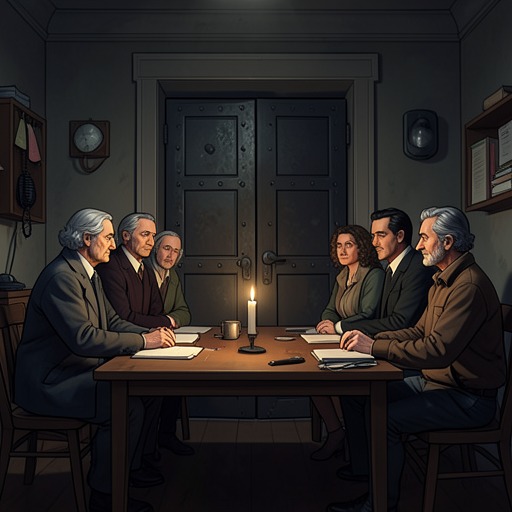
The unsettled condition at home is another consequence of the war. Paine describes a society held together by shared sentiment but lacking law, a settled government, and a named constitution. In that vacuum, he says, property is insecure and people lack a fixed political object. He argues that the absence of established law leaves no clear category of treason, and warns that the distinction between captured British soldiers and armed American inhabitants must be made explicit: the former are prisoners, while the latter, in his proposed legal framework, are traitors. His point is that resistance has created a need for political authority capable of defining obligations and consequences, not that the war itself has supplied a stable legal order.
The war thus makes institutional design urgent. Paine offers the outline of a continental system in which assemblies meet annually, with a president, and handle domestic business under the authority of a Continental Congress. He proposes dividing each colony into six, eight, or ten districts and sending at least thirty delegates from each, for a Congress of at least 390. The presidency would rotate among the thirteen colonies: Congress would choose a president by ballot from the delegates of a colony selected by lot, omitting that colony in the next Congress until all had taken their turn. He further proposes that three-fifths of Congress be required for a majority, so that legislation would need more than a bare division of opinion.
Independence and the Choice of Means
Paine frames independence as the simpler political course. It is, in his formulation, a single line contained within the colonies themselves; reconciliation is a complicated arrangement dependent on a court he regards as treacherous and capricious. The contrast turns on control: independence would allow the continent to determine its own political direction, while reconciliation would leave its security subject to decisions made elsewhere.
He warns that independence will come by one of three routes: the legal voice of the people in Congress, military power, or a mob. The alternatives make timing and method inseparable from the cause itself. If Congress declares independence, the colonies retain the opportunity to build a constitution through political authority. If they neglect that opportunity, Paine fears that separation may later be imposed by force or popular upheaval, with less assurance of an orderly and durable settlement.
The war’s decisive significance, then, lies not only in its capacity to break the colonial connection but in the choice it forces about what should replace it. Paine treats armed resistance as defensible because it answers violence against people and property, but he does not regard armed struggle alone as a sufficient political outcome. The continent must convert resistance into lawful, representative government. In his closing vision, independence can enable a new constitutional beginning; delay risks surrendering that possibility to military power or a mob.